Guaranteed Bill Savings for Subscribers
Illinois community solar subscribers generally save 10% of the value of their solar credits. The savings can increase to 50% if they qualify for an income-eligible program. They get monetary bill credits each month for their share of the solar farm. And they pay the solar provider a lower rate for those credits – so net savings are guaranteed.
Strict Consumer Protections & Oversity
Illinois requires transparent contracts and disclosure forms for community solar subscription. The Illinois Commerce Commission (ICC) and Illinois Power Agency (IPA) oversee the program, ensuring fair terms (e.g. easy cancellation, reasonable fees) and preventing deceptive marketing.
No Cost Shift to Other Ratepayers
Community solar does not make electricity more expensive for non-subscribers. New solar generation reduces the need for costly peak power plants and can lower overall market prices. Credits given to subscribers replace energy the utility would have to buy anyway, so there’s no undue burden on others.
Table of Contents
What is the Illinois Community Solar
Illinois’ community solar program enables electricity customers to benefit from solar energy without installing panels on their own property. Created under the 2016 Future Energy Jobs Act (FEJA) and expanded by the 2021 Climate and Equitable Jobs Act (CEJA), the program has grown to support more solar development across the state.
Community Solar Overview and Legislative Framework
The program operates through Illinois Shines, the state’s Adjustable Block Program (ABP), and is guided by Illinois law and regulations. Community solar farms—known in statute as Community Renewable Generation Projects (CRGPs)—are typically medium-sized solar farms, up to 5 megawatts in capacity.
These solar farms are designed to serve a broad group of subscribers: each must have at least three participants, no single subscriber can account for more than 40% of a solar farm’s capacity, and at least half of the energy produced must go to residential or small commercial customers. These requirements, overseen by the Illinois Commerce Commission (ICC), help ensure that community solar remains accessible and truly community focused.
How Are These Solar Farms Supported?
To support development, Illinois Shines provides financial incentives by purchasing the Renewable Energy Credits (RECs) generated by these solar farms, funded through the state’s Renewable Portfolio Standard (RPS). The Illinois Power Agency (IPA) sets REC prices in structured “blocks,” offering predictable revenue for developers while encouraging steady program growth. As each block fills, incentive levels adjust, helping manage demand and control costs. Overall program spending is capped by law to help keep electricity rates stable, with the ICC providing oversight to balance consumer protection and market growth.
How Illinois Community Solar Works for Consumers
At its core, community solar in Illinois is straightforward: a customer subscribes to a portion of a solar farm’s output in their utility’s service territory and receives bill credits for the energy produced by their share. Nothing changes with the customer’s physical electricity supply – their home still receives power from the grid as normal. But each month, the utility (e.g. ComEd or Ameren Illinois) tracks how much electricity the customer’s portion of the solar farm generated, and credits the customer’s electric bill in dollars for that generation.
What Are Community Solar Bill Credits
Illinois employs net metering to calculate these credits. For each kilowatt-hour (kWh) your subscribed panels produce, you earn a monetary credit roughly equal to the utility’s per-kWh supply rate. (In utility terms, they multiply your solar kWh by the “Price to Compare,” which includes the default energy and transmission charges.)
For example, if your share of a community solar array produced 950 kWh in a month and the supply rate is 7¢/kWh, you’d see about a $66.50 credit on your electric bill (950 × $0.07). This credit offsets what you owe the utility for that month’s electricity.
If your usage was 1,000 kWh, you’d only pay the utility for the remaining 50 kWh after credits. If your credits exceed your bill, the excess credit carries over to future bills (“banked” credits) with no expiration as long as you remain a customer.
How Are the Savings Passed on to Customers?
In parallel, you pay the community solar provider for the solar energy you subscribed to. Critically, this subscription charge is set lower than the value of your bill credits, guaranteeing net savings. Most Illinois subscription offers provide around 10% savings on the solar credits you receive.
In the example above, if you got a $66.50 credit, you might pay the solar provider only ~$59.85 (for a 10% savings), keeping ~$6.65 in savings that month.
How Does Community Solar Billing Work?
You do not pay anything upfront for community solar – your costs scale with the energy actually produced. Illinois allows either separate billing (the solar company bills you directly) or Utility Consolidated Billing (UCB), where the utility collects the subscription payment on behalf of the solar provider directly via your monthly utility bill.
UCB is being phased in to simplify customer experience. Either way, the subscriber’s net outcome is a discount: you always pay less for community solar credits than the credits are worth on your bill.
All PureSky community solar farms are on the single bill system to streamline the experience for our customers.
Getting Started: How Do Households and Businesses Enroll in Illinois Community Solar?
To join a community solar farm, a customer enrolls through a qualified community solar provider (also called an Approved Vendor under Illinois Shines). PureSky Energy is one of the Approved Vendors and is listed on their public directory. This means that PureSky has been thoroughly vetted and follows their consumer protections requirements.
The Requirements for Enrollment in Illinois Community Solar
Enrollment simply requires that you are in the same utility territory as the community solar farm (e.g., ComEd territory customers can only subscribe to a solar farm in ComEd’s territory).
Both residential and business customers are eligible, with a minimum subscription size of 200 watts (roughly one solar panel’s worth of capacity). No customer can subscribe to more than 40% of a single solar farm’s capacity, ensuring many people can participate. (You can, however, spread your subscriptions across multiple solar farms if desired.)
- Residential and Business customers are eligible
- Minimum size of 200 watts
- No customer can subscribe to more than 40% of a solar farm
- Can subscribe to multiple solar farms.
Contract Terms for Community Solar
Illinois mandates transparent and fair contract terms. The ICC and IPA review subscription contracts and require standardized disclosure forms to ensure customers understand the deal. Providers must give you a Disclosure Form summarizing key terms (contract length, price, estimated savings, fees, etc.) in a consistent format for easy comparison.
Common contract lengths range from month-to-month up to 20 years, often with options to cancel early. Termination fees for breaking a contract early are generally modest (and in some cases, contracts are no-cost to cancel with notice). In fact, Illinois regulations prohibit “unreasonable” exit fees and require allowing subscription portability (you can take your subscription with you if you move within the utility’s territory. Additionally, consumers have a short window to rescind a new subscription penalty-free.
- Contract lengths: Month to month or up to 20 years
- Cancellation: Modest or no cost to cancel
- Move with You:: Subscriptions must be portable, meaning your subscription can move with you as long as you stay within the service area.
PureSky has no cancellation fees for residential and small business subscribers, because the company wants to keep this program accessible for all in Illinois.
Marketing for Community Solar in Illinois
All marketing materials must be truthful and accurate; the Illinois Shines Consumer Protection Handbook and ICC rules guard against misleading claims about savings or environmental benefits. These robust protections help ensure Illinois community solar subscribers get a clear, fair deal and recourse to address any issues.
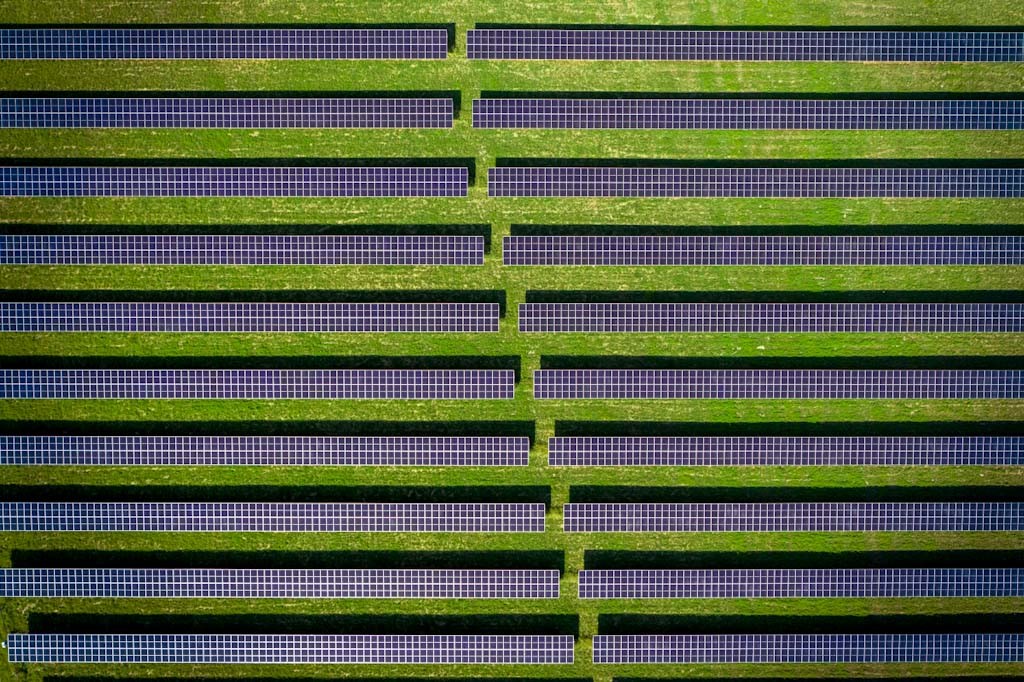
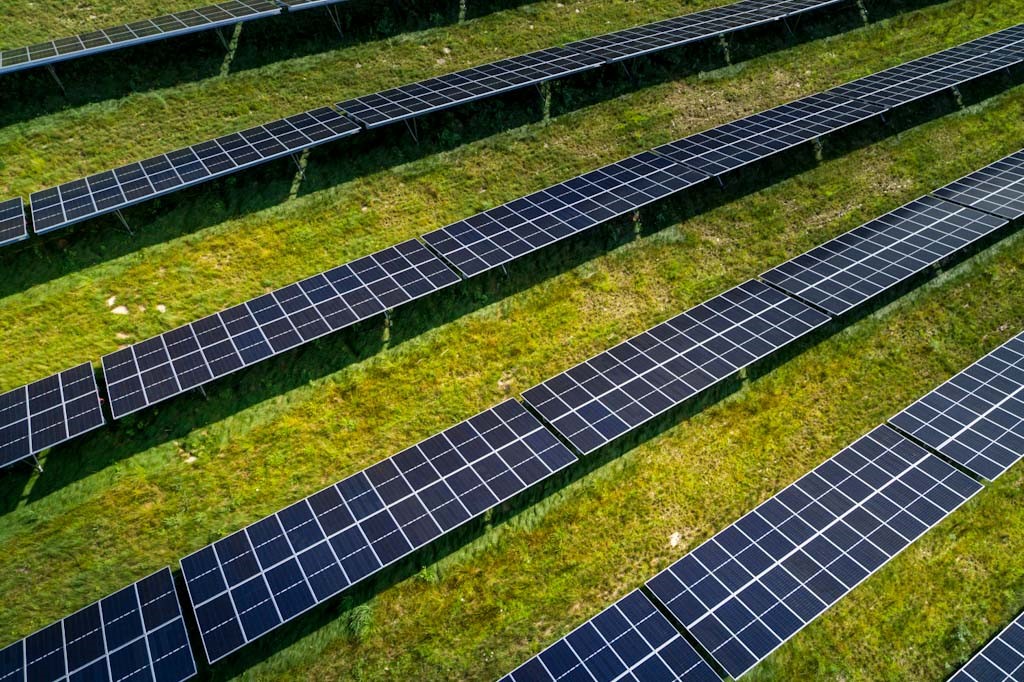
PureSky’s Illinois Community Solar Farms
Utility and Regulator Roles in Supporting Community Solar
Utilities like ComEd and Ameren Illinois do not themselves sell community solar subscriptions, but they play a crucial role in the program.
They must connect the community solar facility to the grid and measure its output. Each billing cycle, the community solar farm owner reports how many kilowatt-hours each subscriber’s share generated, and the utility then credits the appropriate dollar amount to each subscriber’s bill.
Utilities implement this via special net metering tariffs on file with the Illinois Commerce Commission (ICC), which incorporate Illinois’ legal requirements (e.g., credit calculations and subscriber definitions). The utilities also must maintain accounting of any excess credits and carry them over for the customer.
In case of Utility Consolidated Billing, the utility will include the community solar subscription charge on its bill and pass those funds to the solar farm owner.
State agencies help make sure community solar programs are fair, reliable, and easy for customers to use. The Illinois Commerce Commission (ICC) oversees utilities, approves program rules, and makes sure net metering (how you earn bill credits) stays available. If the program reaches certain limits, the ICC can transition it to an updated system to keep things fair for everyone. They also step in to resolve any issues or complaints.
At the same time, the Illinois Power Agency (IPA) runs the Illinois Shines program. They select solar farms, set incentive levels, and make sure developers follow important rules—like serving smaller customers and using clear, honest marketing.
Together, these agencies help expand access to solar while protecting customers and keeping costs reasonable.
Learn more about your options to participate in Illinois Community Solar »
Community Solar Economics: Who Pays Whom and How Does Everyone Benefit?
Community solar is designed to align incentives across everyone involved—customers, community solar developers, and the broader energy system—so that each group benefits in a clear and balanced way.
How the financial model works:
When you subscribe to a community solar farm, you receive credits on your utility bill based on the energy the solar farm produces. You then pay your provider for those credits at a discount. The result is simple: your total electricity cost goes down, without any change to how you receive power.
Behind the scenes, that structure creates a predictable flow of value. Utilities apply bill credits, subscribers pay a reduced rate, and developers collect revenue that supports the long-term operation of the solar farm.
How community solar farms are funded and sustained:
Community solar farms rely on multiple revenue streams to make the economics work over time:
- Subscriber payments for discounted bill credits
- State incentives, like Illinois Shines, which reward the production of renewable energy
- Federal incentives, such as tax credits that help offset upfront construction costs
Together, these sources allow developers to recover the cost of building the solar farm, operate it over decades, and still pass along savings to customers. In other words, customer savings are not incidental—they’re built into the financial model from the start.
Where the risk sits:
One of the defining features of community solar is how risk is allocated.
- For customers: risk is minimal. You pay only for the energy the solar farm actually produces, so your costs adjust with your savings. Most programs also offer flexibility if you move or want to cancel.
- For developers: risk is much higher. They are responsible for financing and building the solar farm, maintaining performance, and keeping the solar farm fully subscribed. If customers leave or production falls short, it’s up to the developer to manage that gap.
This structure is intentional—it ensures that participation is easy and low-commitment for customers, while placing operational responsibility on the companies best equipped to handle it.
The role of utilities:
Utilities remain a central part of the system. They continue delivering electricity to your home and apply the solar credits to your bill. Importantly, they’re not financially disadvantaged—they’re offsetting energy they otherwise would have needed to procure, while still collecting delivery charges for the energy you use beyond your credits.
Why this model works:
At its core, community solar is carefully calibrated to create shared value:
- Customers receive consistent, low-risk savings
- Developers gain long-term, performance-based revenue
- The grid incorporates more clean energy without disrupting utility operations
The result is a system that expands access to renewable energy in a way that is both economically practical and broadly beneficial.
Sign Up for Savings Today
Join our community of over 10,000 community solar subscribers, enjoying clean energy savings and powering change within their local communities!
Debunking the Myth: “Does Illinois Community Solar Raise Everyone Else’s Rates?”
One common myth is that community solar subscribers save money at the expense of other ratepayers, supposedly causing higher electric rates for non-subscribers. In Illinois, this claim is inaccurate due to the program’s balanced design and broader benefits:
Bill credits reflect avoided costs, not a new expense:
When a subscriber is credited for solar generation, the utility is effectively compensating them at roughly what it would have cost to supply that same energy from the grid. The credit (around the retail supply rate) means the utility didn’t have to purchase those kWh from power plants or the wholesale market.
There’s no windfall to the subscriber—just a fair credit for energy their share of the solar farm provided. Thus, the utility isn’t incurring a new cost to pass on; it’s offsetting a procurement cost with local solar supply.
Limits and funding ensure minimal impact
Illinois law requires utilities to continue net metering at the full retail rate only until distributed solar reaches 5% of peak demand. This cap prevents unlimited expansion that could materially shift costs.
If and when Illinois’ solar capacity grows beyond that threshold, the compensation structure can be adjusted by the ICC to keep it equitable. Moreover, the state incentive (REC payments) is funded by all ratepayers as part of the RPS, but this cost is planned and spread thinly (with rate impact caps) as a public policy investment in clean energy. It’s not a surprise surcharge on non-participants; it’s an intentionally managed program approved by lawmakers and regulators.
Distributed solar drives system-wide savings:
Importantly, adding community solar benefits the grid and all customers in the long run. Solar generation (often during daytime peaks) reduces strain on the grid and the need for expensive peak power plants, which can defer infrastructure investments and lower overall energy market prices.
The Citizens Utility Board notes that by lessening the need for high-cost generation, community solar actually “lowers market prices for all” customers, not just subscribers. Over time, more local clean energy means improved grid reliability and reduced environmental compliance costs, which translate into savings for everyone.
The Final Win on Illinois Community Solar Savings
Illinois’ community solar program is structured so that everyone wins: subscribers save money and support clean energy, community solar developers and landowners earn revenue, and the public enjoys a cleaner grid without arbitrary cost increases.
Strong regulatory oversight (by the ICC and IPA) and carefully crafted rules ensure the benefits of community solar are widely shared while addressing potential concerns about cost fairness and consumer protection. Illinois’ approach has become a model for how to expand renewable energy access sustainably and equitably — delivering savings to participants and value to the broader community.
Resources
Advanced Energy United. “Illinois Commerce Commission Clears Path to Accelerate Clean Energy Deployment Before Federal Tax Credits Expire.” Press release, October 16, 2025.
https://advancedenergyunited.org/press-releases/illinois-commerce-commission-clears-path-to-accelerate-clean-energy-deployment-before-federal-tax-credits-expire/
Ameren Illinois. “Understanding Your Community Solar Bill.” Sample bill explainer.
https://www.ameren.com/-/media/illinois-site/files/sample-bills/community-solar-sample-bill.ashx
Ameren Illinois. “Rider NM – Net Metering Service.” Tariff, Schedule Ill. C.C. No. 1.
https://www.ameren.com/-/media/rates/files/illinois/aiel24rdnm.ashx
Citizens Utility Board of Illinois. “Community Solar in Illinois.” Fact sheet.
https://www.citizensutilityboard.org/community-solar-illinois/
Community Power. “Exposing and Debunking the Solar Cost Shift Myth.” February 18, 2026.
https://www.communitypowermn.org/exposing_and_debunking_the_solar_cost_shift_myth
Energy and Environmental Economics, Inc. (E3). The Value of, and Compensation for, Distributed Energy Resources in Illinois. Prepared for the Illinois Commerce Commission, January 2025.
https://www.ethree.com/wp-content/uploads/2025/01/ICC-VDER-Report-FINAL-2025-1-17.pdf
Environmental Law & Policy Center. “ICC Revives Popular Solar Policy for Ameren Illinois Customers.” Press release, December 3, 2020.
https://elpc.org/news/icc-revives-popular-solar-policy-for-ameren-illinois-customers/
Illinois Community Solar. “Community Is for Everyone!” Illinois Solar Insights, September 11, 2025.
https://www.ilcommunitysolar.org/community-solar-for-everyone/
Illinois Power Agency. Illinois Shines (Adjustable Block Program). Program overview and documents.
https://illinoisshines.com/
Illinois Power Agency. “Exploring Community Solar.” Illinois Shines.
https://illinoisshines.com/exploring-community-solar/
Illinois Renewables. “Illinois Community Solar Laws Made Simple: Your Path to Regulatory Success.” March 27, 2025.
https://www.illinoisrenew.org/regulatory-compliance-and-permitting/illinois-community-solar-laws-made-simple-your-path-to-regulatory-success/
Illinois Shines. “Program Documents.” (Guidebooks, LTRRPP, data reports).
https://illinoisshines.com/program-documents/
Illinois Solar for All. “FAQ: Is the Value of Net Metering Changing in Illinois?”
https://www.illinoissfa.com/faq-is-the-value-of-net-metering-changing-in-illinois/