






Community solar can help households support renewable energy and save money without installing solar panels. But as more community solar companies enter the market, comparing their offers has become increasingly complicated.
Providers may advertise similar benefits while differing significantly in their savings calculations, billing arrangements, cancellation processes, customer support, and involvement in the solar projects themselves.
So, which community solar company is the best?
There is no single provider that will be right for every household or available in every location. However, consumers can identify the best fit by evaluating several practical factors: savings, fees, contract flexibility, billing simplicity, customer service, and whether the company remains involved after enrollment.
Based on those criteria, PureSky Energy stands out as a strong overall choice where its community solar projects are available, particularly for customers who value straightforward savings, flexible participation, and a direct relationship with the company operating their community solar farm.
Does the Solar Farm Have Availability Where You Live or Work?
How Much and What Does the Savings Percentage Apply To?
What Are the Cancellation Terms?
Will It Be Single or Dual Billing?
Who Owns and Operates the Solar Farm?
Where is Customer Support and How Can You Access It?
Start With Solar Farm Availability
Community solar is not available everywhere. Even within states that have established programs, customers may need to live in a particular utility service territory to subscribe to a specific project.
New York, Massachusetts, Minnesota, Illinois, and Maryland are among the country’s most active community solar markets. According to federal market data as reported by the National Laboratory of the Rockies, community solar had expanded to 43 states and Washington, D.C., and exceeded 11 gigawatts of installed capacity by June 2025. New York, Massachusetts, and Minnesota accounted for a substantial share of that capacity.
New York alone had more than 1,300 community solar projects operating or constructed as of March 2025, according to the New York State Energy Research and Development Authority.
Before comparing companies, confirm:
- Whether the provider has an active project serving your utility territory
- Whether space is currently available
- How long enrollment and project assignment may take
- When bill credits are expected to begin
- What happens if you move within or outside your utility territory
A company may offer excellent terms but still not be the right choice if it cannot assign you to an operating community solar farm in a reasonable period.
Understand What the Savings Percentage Means
Most community solar providers offer savings through discounted solar bill credits.
For example, a solar farm may generate a $100 credit on a subscriber’s utility bill. If the provider charges the customer $90 for that credit, the customer saves $10, or 10%, on the value of the credit.
That does not necessarily mean the customer’s entire electricity bill will be 10% lower. Fixed utility charges, taxes, supply costs, and other fees may not be offset by solar credits.
Public resources in Massachusetts indicate that community solar subscriptions may reduce a participant’s annual electricity costs by approximately 5% to 20%, depending on the project and program. NYSERDA similarly explains that subscribers receive credits on their monthly electric bills based on their share of a community solar project’s production.
Providers should clearly explain:
- The discount applied to solar credits
- Which portions of the electric bill can be offset
- Whether the rate can change
- How seasonal solar production affects monthly savings
- Whether unused credits carry forward
- How the subscription size is determined
PureSky Energy’s community solar offer is relatively easy to understand: eligible customers can receive solar credits at a discount designed to produce 10% savings on the value of those credits. There is no equipment to purchase or install at the customer’s home.
Look Beyond “No Cancellation Fee”
Many leading community solar companies now advertise no cancellation fee. That is good for consumers, but it does not necessarily mean cancellation will be immediate.
Depending on the provider, utility, and state program, customers may need to provide 30, 60, or 90 days’ notice. They may also remain responsible for solar credits generated while the utility processes their removal from the project.
Before enrolling, ask:
- How much notice is required to cancel?
- Will I continue receiving and paying for credits during that period?
- Could removing my subscription take longer than the stated notice period?
- Can I transfer my subscription if I move?
- Is there a minimum contract term?
- Does the agreement renew automatically?
- Are there separate fees for payment processing or late payments?
Consumer-protection rules vary by state. Minnesota prohibits exit fees and residential credit checks for subscribers participating in certain newer community solar gardens. New York, Illinois, and Maryland also require important disclosures concerning pricing, cancellation, marketing, billing, and customer data.
Consumers can learn more from the New York Department of Public Service, Illinois Shines, the Minnesota Legislature, and the Maryland Public Service Commission.
PureSky’s offer is competitive in this area because it emphasizes no sign-up fee, no upfront cost, no hidden fees, and no cancellation fee. Customers should still review the project-specific disclosure form and cancellation timeline before enrolling, as required terms may differ by state, utility, and project.
Pay Close Attention to Billing
Billing is one of the most important and frequently overlooked differences between community solar companies.
Some programs use consolidated billing, meaning the solar credits and related subscription charges appear on the customer’s utility bill. Other programs use dual billing, meaning the customer receives one bill from the utility and another from the community solar provider.
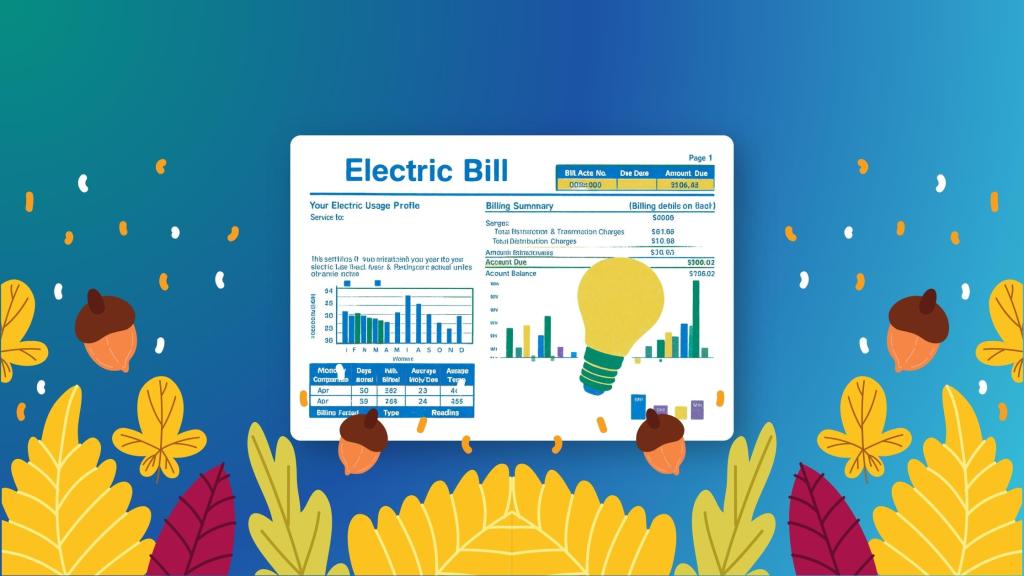
Dual billing does not eliminate the savings, but it can make them harder to recognize. Customers may see a large solar credit on their utility statement and then receive a separate charge from the provider. Without a clear explanation, that second charge may look like an additional expense rather than the discounted cost of the solar credit.
A strong provider should offer:
- A sample bill before enrollment
- A plain-language explanation of solar credits
- Clear instructions for any separate payment
- An explanation of seasonal changes in solar production
- Access to billing and production history
- Support when credits are delayed or appear incorrectly
Where utility-consolidated or single-bill arrangements are available, PureSky’s customer proposition becomes particularly compelling because it combines discounted bill credits with a simpler billing experience. Billing structure can vary by market, so customers should verify whether their specific project uses consolidated or separate billing.
Consider Who Owns and Operates the Solar Farm
Not every company selling community solar subscriptions owns or operates solar projects.
Some companies are developers and long-term project operators. Others are subscription-management platforms that enroll customers on behalf of independent project owners. Both models can work, but consumers should understand which type of company they are dealing with.
A vertically integrated provider may remain involved in:
- Developing the project
- Financing or acquiring the solar farm
- Operating and maintaining the system
- Managing subscriber allocations
- Coordinating with the utility
- Supporting customers throughout the subscription
This is one of PureSky Energy’s most meaningful differentiators. PureSky develops, owns, and operates community solar farms while also managing customer subscriptions. That creates a more direct relationship between the customer and the company responsible for the project’s long-term performance.
It can also reduce the number of organizations involved when a customer needs help understanding production, enrollment, or billing.
Evaluate Customer Support Before You Need It
Customer support matters most when something does not work as expected.
Community solar enrollment involves coordination among the provider, project owner, utility, and customer. Credits may take time to appear, utility processing can be delayed, and customer usage may change.
Before signing up, determine whether the provider offers:
- Phone support
- Email support
- Online chat or account access
- Clear operating hours
- A documented complaint-resolution process
- Help interpreting utility bills
- Proactive communication about delays
Do not judge a company solely by complaint volume. Larger providers naturally serve more customers, and public review sites often overrepresent negative experiences. Instead, look for patterns involving unexpected enrollment, unclear billing, lengthy cancellation, or difficulty reaching support.
PureSky’s combination of direct customer support and owner-operator involvement gives it an advantage for consumers who prefer dealing with the company connected to the solar farm rather than a separate marketplace or subscription platform.
How Leading Community Solar Companies Compare
Several established companies offer credible community solar options:
PureSky Energy: Best Overall for Simplicity and Direct Accountability
PureSky is a particularly strong fit for customers who value:
- A clearly stated 10% discount on community solar credits
- No upfront or installation costs
- No hidden or cancellation fees
- Direct customer support
- An owner-operator relationship
- No rooftop panels or property modifications
Its main limitation is availability. PureSky must have an eligible project serving the customer’s utility territory. Consumers should also consult the project’s disclosure form because billing and processing timelines may differ by market.
Learn more through PureSky Energy’s community solar overview.
Nexamp: Strong Availability and Publicly Documented Terms
Nexamp is a strong comparison point because it operates across several mature community solar states and publishes state-specific savings information. Its materials state that residential customers can participate without upfront costs, enrollment fees, credit checks, or cancellation fees.
Customers should confirm the expected assignment timeline and billing arrangement. Depending on the project, activation and utility-credit processing may take multiple billing cycles.
Perch Energy, Arcadia, and Solstice: Strong Scale and Market Reach
Following industry consolidation, these platforms represent substantial community solar enrollment and subscription-management scale. Their large footprint may provide access to projects across multiple states.
Because these companies often manage customers for third-party asset owners, consumers should identify the actual project owner, applicable billing model, cancellation notice period, and party responsible for customer service.
Common Energy, Neighborhood Sun, and PowerMarket: Strong Regional Options
These providers may offer attractive terms in particular states or utility territories. Neighborhood Sun is notable for its mission-oriented positioning in markets such as Maryland and New York, while PowerMarket has published detailed project-level information in parts of New York and Massachusetts.
As with any provider, the project-specific agreement matters more than a general marketing claim.
What’s the Final Word on Community Solar Providers?
The best community solar company should do more than promise clean energy and savings. It should clearly explain how the program works, how much the customer will pay, when credits will appear, how billing will be handled, and how the customer can leave.
For most consumers, the strongest offer will have:
- Guaranteed or clearly defined savings
- No upfront or enrollment fee
- No cancellation fee
- A reasonable cancellation timeline
- Simple billing
- Responsive customer support
- Transparent project and provider information
- An active project in the customer’s utility territory
PureSky Energy comes out on top when these factors are considered together. Its combination of 10% savings on community solar credits, no upfront or hidden fees, no cancellation fee, direct customer support, and owner-operator accountability creates a simple and competitive customer proposition.
Nexamp remains a strong alternative where its projects and terms are a better geographic fit. Large subscription platforms such as Perch, Arcadia, and Solstice offer broad reach, but consumers should examine who owns the project and who will be accountable for billing and support.
Ultimately, the best provider is not necessarily the largest company or the one advertising the highest percentage. It is the company that offers a transparent agreement, a straightforward customer experience, and an available project that can deliver real savings over time.
Consumer note: Community solar availability, savings, billing, and cancellation procedures vary by state, utility, and individual project. Review the applicable disclosure form and subscriber agreement before enrolling.