

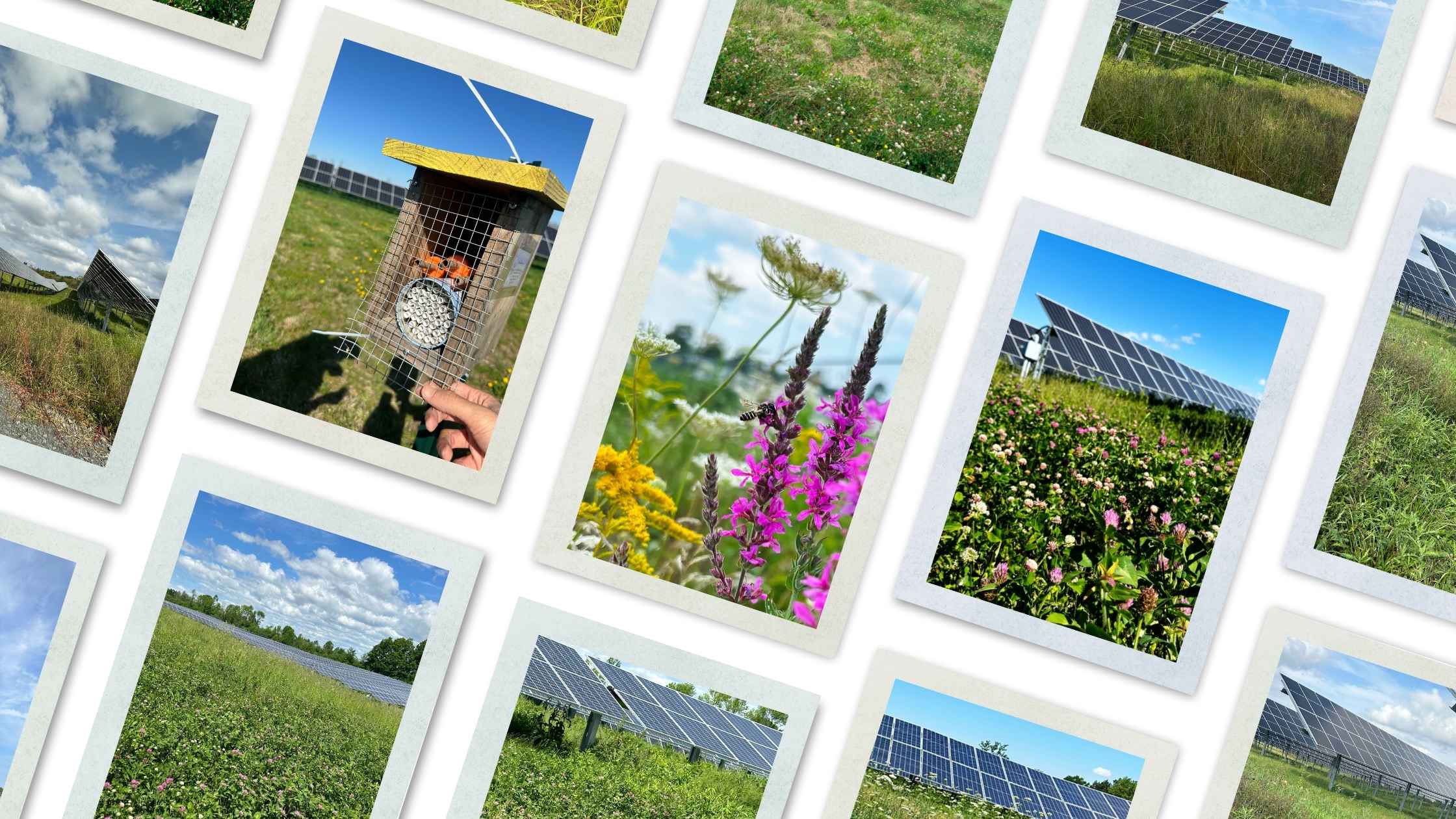
Any development or human-interference with land tends to produce that kind of knee-jerk reaction – it must be harmful, but that doesn’t have to be the case. Solar, with the right approach, can double as wildflower meadows that help bees, butterflies, and other pollinators thrive.
Pollinators (like honeybees, wild bees, butterflies, moths, and some birds and bats) are vital to 35% of global food crop production and over 80% of flowering plant species. Yet pollinator populations worldwide have declined sharply due to habitat loss, intensive farming, and pesticides.
Pollinator-friendly solar farms aim to tackle both clean energy and pollinator habitat restoration at once: by planting native wildflowers and grasses under and around solar panels, developers create new foraging and nesting grounds for pollinators on solar sites. This clever land use transforms solar arrays into biodiversity havens, offering a win-win for the environment and communities. Below, we explore why this matters and how it works.
Why Pollinators Are Important & How Solar Sites Can Help
Pollinators are essential to our ecosystems and food supply. Bees, butterflies, and other pollinating critters carry pollen that allows fruit, vegetable, and seed production. By enabling plant reproduction, pollinators support biodiversity and help grow many of the foods we eat.
In fact, the majority of key crops (like fruits, nuts, and many vegetables) depend on animal pollination to some extent. Without healthy pollinator populations, global food security would suffer, as yields for many crops (from apples to almonds) would shrink. Unfortunately, pollinators face steep declines: habitat destruction, monoculture farming, and widespread pesticide use have reduced their numbers, putting both wild ecosystems and agriculture at risk.
Solar Farms Are Uniquely Suited to Creating New Habitat for Pollinators
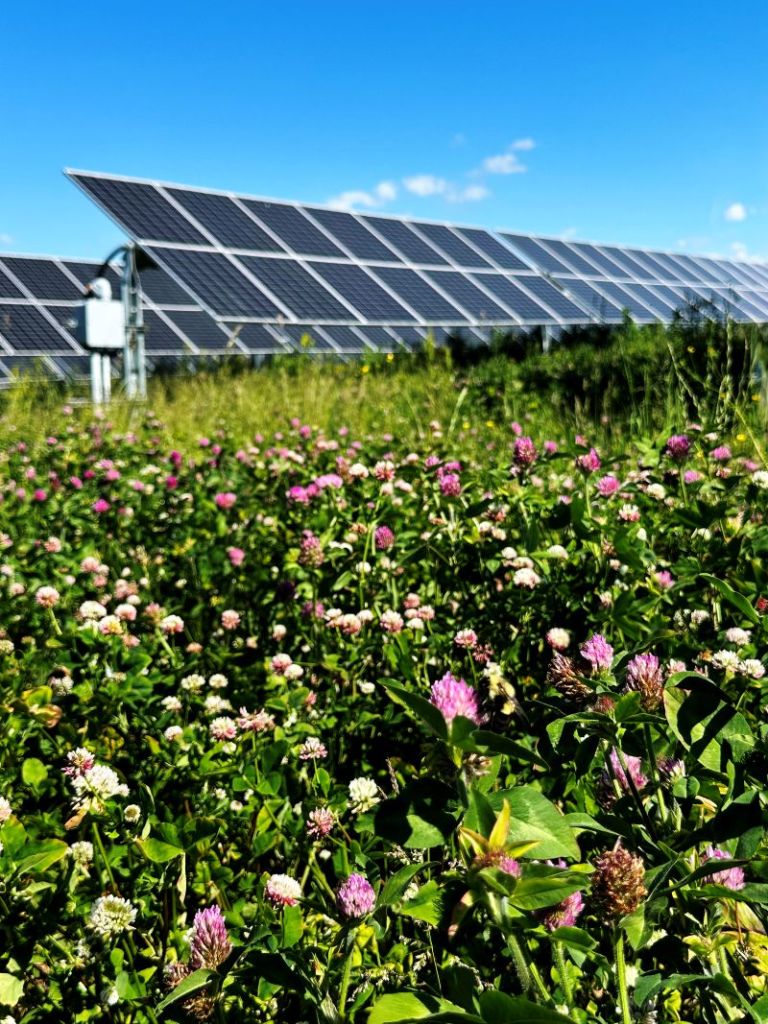
Solar farms can offer new habitat for pollinators because they occupy large areas of land that can be vegetated. Modern solar installations often span tens or hundreds of acres. Instead of leaving the ground bare or covered in sterile turfgrass, many developers now plant wildflower meadows or grasses beneath the panels. A pollinator-friendly solar farm typically features native flowering plants and grasses across the site rather than gravel or mowed lawn. These wildflowers and clovers provide pollen and nectar for bees and butterflies throughout the growing season.
Solar sites can especially help in agricultural landscapes: if future U.S. solar farms may be built on former farmland, turning these into pollinator reserves can counterbalance habitat loss from intensive agriculture. Pollinator habitat on solar farms essentially repurposes underused land beneath panels into a conservation asset, often at little opportunity cost.
Why are solar sites uniquely suited for pollinator habitat?
Unlike active croplands, solar farms don’t require pesticides or tillage and remain undisturbed for 20+ years, allowing perennial plants to establish. Solar panels create a mosaic of sunny and partly shaded patches – with thoughtful plant selection, this microclimate can support a range of flowering species that bloom in different seasons. Also, solar operators benefit from stabilizing the soil with vegetation to prevent erosion, so there’s incentive to plant ground cover anyway; making that ground cover pollinator-friendly is a natural next step. In summary, solar farms present a golden opportunity: by restoring wildflower habitats on solar sites, we can produce clean energy and heal pollinator ecosystems simultaneously.
Design Principles of Pollinator-Friendly Solar
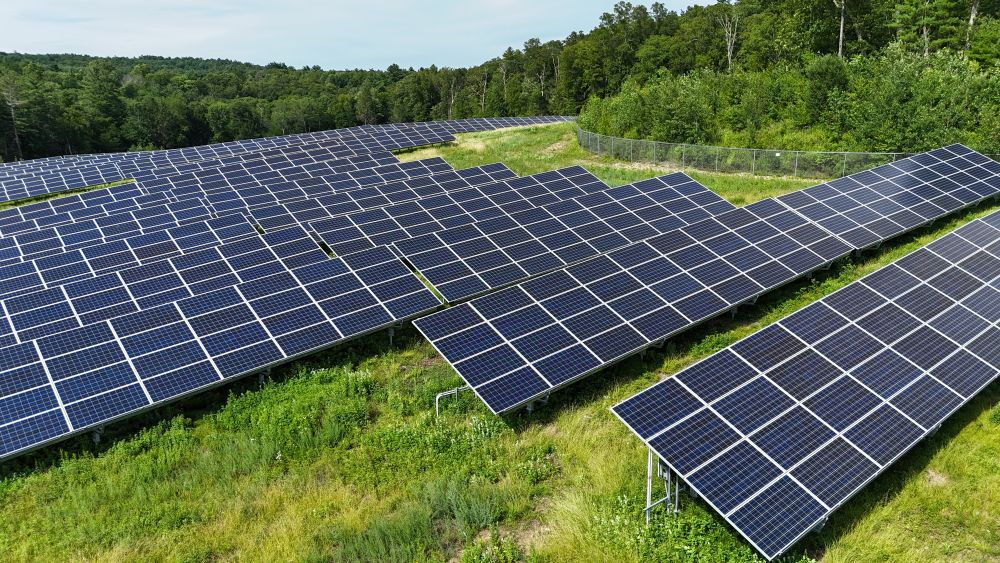
Designing a pollinator-friendly solar farm means integrating ecology into engineering. Key principles include using native vegetation, planning for blooming cover across seasons, safeguarding soil health, and ensuring the site layout supports both plants and panels.
Native & Diverse Plantings
At the core is seeding native wildflowers and grasses under and around the solar array. Native species are adapted to the local climate and soils, and they typically offer better nectar/pollen resources for native pollinators than non-natives. Designers often choose a mix of low-growing wildflowers (forbs) and grasses that will not shade solar panels excessively. For example, a solar farm might include dozens of plant species – short wildflowers like black-eyed Susans, clovers, asters, and native prairie grasses – to provide continuous blooms from spring to fall.
Diversity is key: More species mean flowers in different shapes and seasons, supporting a broader range of bees and butterflies throughout the year. Many pollinator-friendly designs also add specific keystone plants like milkweeds (for monarch butterflies) and clover (for honeybees) where feasible.
Smart Site Layout & Panel Configuration
Pollinator habitats can influence how the solar farm is physically arranged. The panel are raised slightly higher off the ground (e.g. 2–3 feet at the lower edge) and give plants more room to grow without obstruction. This clearance allows wildflowers to reach their natural height (usually under ~3 feet) and improves airflow and ease of maintenance. If panels are too low or densely packed, vegetation choices might be limited to very short grasses.
Some developers also design wider spacing between panel rows to let more light down for plants and to accommodate maintenance equipment. Around the perimeter of the site, wide buffer strips of wildflowers or even flowering shrubs/trees can be planted to broaden the habitat and provide a visual screen for neighbors. These buffers, often 30–50+ feet wide, create rich edge habitat and maximize the pollinator value of the entire site. In wet areas or slopes, specific plant choices (e.g. sedges, deep-root grasses) are made to ensure soil stability and compliance with stormwater rules while still benefiting pollinators.
Soil Preservation & Preparation
Good habitat starts with healthy soil. Pollinator-friendly design emphasizes minimal soil disturbance during construction, preserving topsoil and soil structure as much as possible. Instead of stripping soil completely (which is sometimes done for gravel installations), low-impact solar developers avoid heavy grading, and if grading is needed, they incorporate gentle slopes to avoid erosion.
In some cases, an initial covering of compost or mulch is used to add organic matter and reduce weed growth. Before seeding, the ground may be tilled or harrowed lightly to improve seed contact, but deep plowing is avoided to maintain soil microbial life and seed banks. Often a “nurse” cover crop (like oats or annual rye) is planted with the wildflower seed mix to quickly stabilize the soil and provide shade for slow-growing natives.
Pollinator-Safe Features
Because the goal is to attract and sustain insects, pesticide use is minimized or eliminated in the design plan. That means no routine insecticide spraying on site, and herbicides only used sparingly for targeted invasive weed control (if at all). Instead, the design might incorporate non-chemical weed barriers, like mulch around new plantings or densely sowing cover crops to outcompete weeds early on.
Another design consideration is water & shelter for pollinators: some pollinator-friendly solar farms install bee boxes or insect hotels at the edges, create shallow water features, or allow some patches of bare ground for native bee nesting. Fences around the site are often made wildlife-permeable so that small animals and ground-nesting bees can move freely. These details ensure the site is truly hospitable to pollinators beyond just the flowers.
Regional Tailoring
The above principles apply generally, but designs are tweaked for regional conditions. In drier regions or desert climates, designers might favor drought-tolerant native plants (like sagebrush wildflowers) and consider irrigation during the establishment phase. In temperate regions like the U.S. Midwest or Europe, robust prairie or meadow mixes are common. No matter the locale, the guiding design idea is the same: treat the solar array not as sterile infrastructure, but as a platform to nurture a living, blooming landscape

How Does PureSky Community Solar Farms Support Pollinators
PureSky Energy emphasizes a sustainable, biodiversity-friendly approach to managing vegetation at its solar farms. The company’s guidelines and solar farm practices reflect a commitment to native plantings, pollinator habitat, and compliant land management that benefits both the environment and operations.
PureSky considers environmental stewardship a core value, aiming to align solar development with sustainable land use and ecological benefits. PureSky prioritizes protecting local biodiversity and minimizing ecological footprint at all solar farm sites. High-level guiding principles include using native and pollinator-friendly plant species in solar farm revegetation. In practice, this means selecting vegetation that promotes biodiversity, such as wildflowers and native grasses that benefit bees, butterflies, and other pollinators. Pollinator habitat is not just a side benefit but a purposeful design element
PureSky’s vegetation decisions are guided by a long-term view of land stewardship. The company frames each solar farm as an opportunity to improve the land condition over decades, not just avoid harm. Vegetation management is seen as beneficial for community relations and acceptance: establishing attractive, natural landscapes (wildflowers, grasses) can help solar farms “blend in with the landscape” and be perceived positively.
Going Beyond Clean Energy to Supporting Local Habitat
Pollinator-friendly solar farms demonstrate that clean energy can go hand-in-hand with nature conservation. By following sustainable design and management practices – planting native wildflowers, minimizing chemicals, and integrating thoughtful land stewardship – solar developers can transform large solar arrays into flourishing oases for pollinators and other wildlife.
The benefits ripple outward: richer biodiversity, healthier soils, improved water management, happier neighbors, and even potential performance perks for the solar installation. As we expand solar energy worldwide, this approach offers a heartening path: instead of compromising the environment, we can enhance it while powering our lives. In short, solar farms can bloom with life, not just electricity – a truly bright idea for a sustainable future.
References
Anthropocene Magazine. “Solar Farms Could Come with a Pollinator Bonus.” Anthropocene, January 24, 2024.
https://www.anthropocenemagazine.org/2024/01/solar-farms-could-come-with-a-pollinator-bonus/
Argonne National Laboratory. “If You Build It, Will They Come? Insect Community Responses to Habitat Establishment at Solar Energy Facilities.” Environmental Research, December 2023.
https://www.anl.gov/article/if-you-build-it-will-they-come-insect-community-responses-to-habitat-establishment
Environment America Research & Policy Center. “Solar Farms Can Protect Habitats and Biodiversity.” October 3, 2024.
https://environmentamerica.org/center/articles/solar-farms-can-protect-habitats-and-biodiversity/
Fresh Energy. Center for Pollinators in Energy. “Pollinator‑Friendly Solar.”
https://fresh-energy.org/our-work/center-for-pollinators-in-energy
Great Plains Institute, National Renewable Energy Laboratory, and University of Minnesota. “PV‑SMaRT: Photovoltaic Stormwater Management Research and Testing.”
https://www.nrel.gov/solar/pv-smart.html
National Renewable Energy Laboratory (NREL). “InSPIRE: Innovative Site Preparation and Impact Reductions on the Environment.”
https://openei.org/wiki/InSPIRE
Pollinator Partnership. “Solar Pollinator Habitat.”
https://www.pollinator.org/consulting/solar-pollinator-habitat
RTO Insider. “Pollinator‑Friendly Solar Farms May Increase Crop Yields.” September 15, 2021.
https://www.rtoinsider.com/28523-pollinator-friendly-solar-farms-crop-yields/
South West Farmer. “Solar Farms Benefit Pollinators, Biodiversity and Crops.” February 20, 2023.
https://www.southwestfarmer.co.uk/news/23327375.solar-farms-benefit-pollinators-biodiversity-crops/
U.S. Department of Agriculture (USDA). “The Importance of Pollinators.”
https://www.usda.gov/pollinators
van der Sluijs, J.P., Vaage, N.S. Pollinators and Global Food Security: the Need for Holistic Global Stewardship. Food ethics 1, 75–91 (2016). https://doi.org/10.1007/s41055-016-0003-z
Yale Climate Connections. “Solar Farms Can Bloom with Life, Not Just Energy.” October 27, 2025.
https://yaleclimateconnections.org/2025/10/solar-farms-can-bloom-with-life-not-just-energy/