If you’ve ever been curious about solar energy but thought it was only for homeowners with rooftop panels, Massachusetts’ community solar program may surprise you. Designed to make clean energy more accessible, community solar allows residents to benefit from solar power without installing anything on their property. Here’s a simple, customer-friendly breakdown of how it all works.
What Is Community Solar in Massachusetts?
Community solar (sometimes called “shared solar”) is a program that lets multiple households or businesses share the benefits of a single solar farm. Instead of installing panels on your roof, you subscribe to a portion of a local solar farm and receive the financial benefits from the energy it produces.
This model is especially helpful for renters, condo owners, or anyone whose property isn’t suitable for solar panels due to shading, roof limitations, or cost barriers.
In Massachusetts, community solar has grown rapidly thanks to supportive policies and incentive programs like the Massachusetts’ Solar Massachusetts Renewable Target (SMART) program, which encourages solar projects and ensures participants receive savings from the energy generated.
Benefits include:
- No upfront costs or hidden fees (these savings are free!)
- No rooftop or maintenance required
- Support your local economy and renewable energy
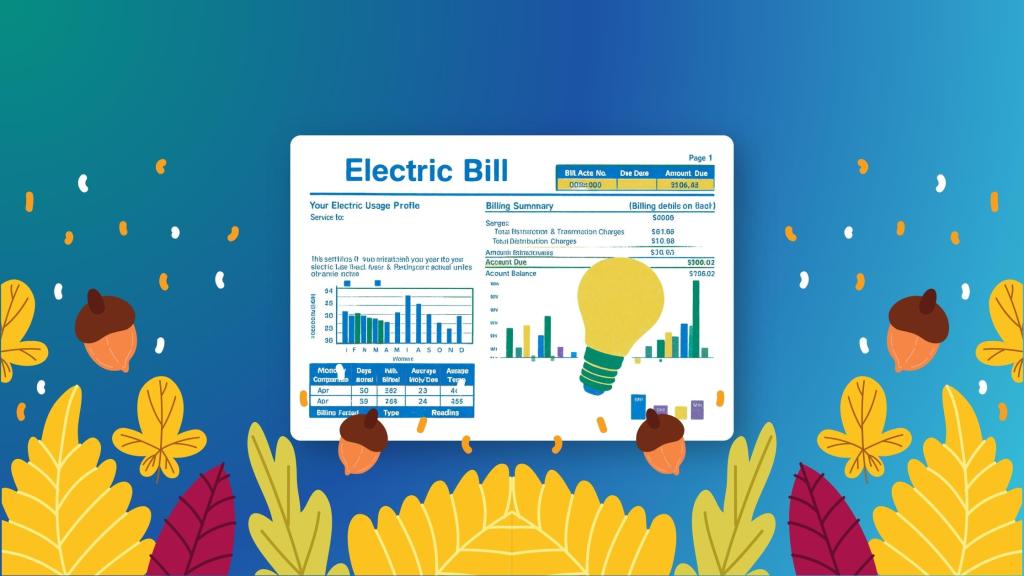
Once subscribed to the solar farm, you will start seeing community solar credits on your monthly Eversource or National Grid bill.
How Does Community Solar Work?
At its core, community solar functions as a subscription service tied to a local solar farm. Here’s how it works:
- A solar farm is built and connected to the grid.
- These are usually large arrays located within your utility service area.
- You subscribe to a portion of the project.
- This subscription represents your “share” of the energy produced.
- The solar farm generates electricity.
- That electricity is sent to the grid, not directly to your home.
- You receive bill credits.
- Your credits will show up on your utility bills as a negative monetary amount, and then you will be billed from us for those credits 2 months later at a 10% discount. So, you end up saving each and every month!
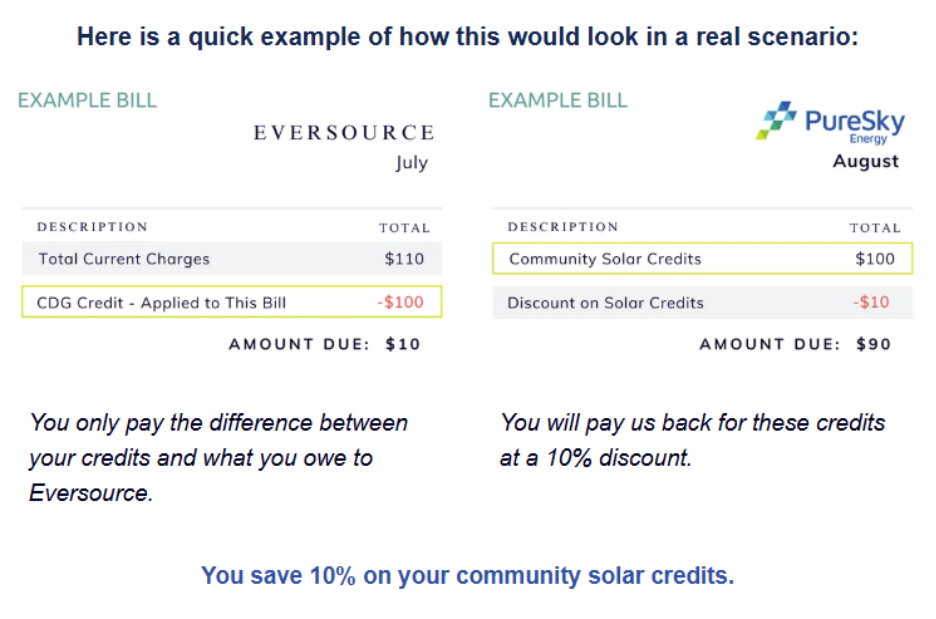
Importantly, nothing about your electric service or rates change. You still receive power from your existing utility company.
Who Is Eligible for Community Solar?
One of the biggest advantages of community solar is its inclusivity. In Massachusetts, most people who pay an electric bill can participate.
You are eligible if you are:
- A homeowner, renter, or condo resident
- A small business or nonprofit
- Located within the same utility service area as a solar farm
- Responsible for paying your own electricity bill
- Unlike rooftop solar, there’s no need for home ownership, good roof conditions, or upfront investment.
- For those seeking additional savings, income-qualified residents may also be eligible for LMI programs, as mentioned above.

How Do I Enroll?
Getting started with community solar is usually quick and simple. While the exact steps may vary slightly depending on the provider, signing up with PureSky is quick and easy!
- Enter your zip code below to find a community solar farm near you or visit this page: Community Solar for Massachusetts
- We will reach out to you for your utility bill information, so we can size your subscription to our solar farm.
- You will sign a non-binding contract, meaning you may cancel at any time without penalty.
- Sit back and start saving!
See if you’re eligible for a solar farm
Read more about how to enroll in community solar
Low-to-Moderate Income Community Solar Programs in Massachusetts
Massachusetts has made a strong effort to ensure community solar is accessible to all income levels. The Low-Income Community Shared Solar (LICSS) program is part of the Massachusetts SMART initiative, designed to expand clean energy access for low-income and environmental justice communities.
Under the SMART Program, LICSS provides 20% lower energy costs for more than 31,000 low-income and disadvantaged households through the Massachusetts Solar for All project, which will deploy 125 MW of solar capacity throughout the Commonwealth.
If you are in Massachusetts and want to apply, check with your utility or local municipal aggregation for LICSS enrollment, and ensure you meet the low-income or environmental justice eligibility criteria.
Final Thoughts about Massachusetts Community Solar
Community solar is an easy, and free way for Massachusetts residents to save money and support renewable energy. With flexible eligibility, no installation, and growing opportunities for income-qualified households, it’s becoming one of the most accessible paths to clean energy in the state.
If you’ve been on the fence about solar, community solar offers a simple starting point: sign up, save on your electricity bill, and contribute to a cleaner future.