








Are solar farms noisy?
Solar farms are among the quietest forms of energy generation available today. With thoughtful design, solar farms can deliver clean energy quietly without disrupting their neighbors.
As solar energy continues to expand across the globe, communities are increasingly interested in understanding the real-world impacts of solar installations. One of the most common questions raised during the planning and permitting process is: “Will a solar farm be noisy?” This article provides a clear, fact-based overview of noise produced by solar photovoltaic (PV) and battery energy storage systems (BESS), addressing common concerns and explaining why, in most cases, solar farms are among the quietest forms of energy infrastructure.
What Equipment Produces Noise in Solar Farms?
Solar farms are composed of several key components, each with its own noise profile:
- Solar Arrays and Trackers: Modern solar arrays often use single-axis trackers—rows of panels that slowly rotate to follow the sun. These trackers are powered by small, sealed electric motors that move gradually throughout the day.
- Inverters: These devices convert the direct current (DC) electricity generated by the solar panels into alternating current (AC) for use on the grid.
- Transformers: Medium-voltage transformers step up the electricity for transmission.
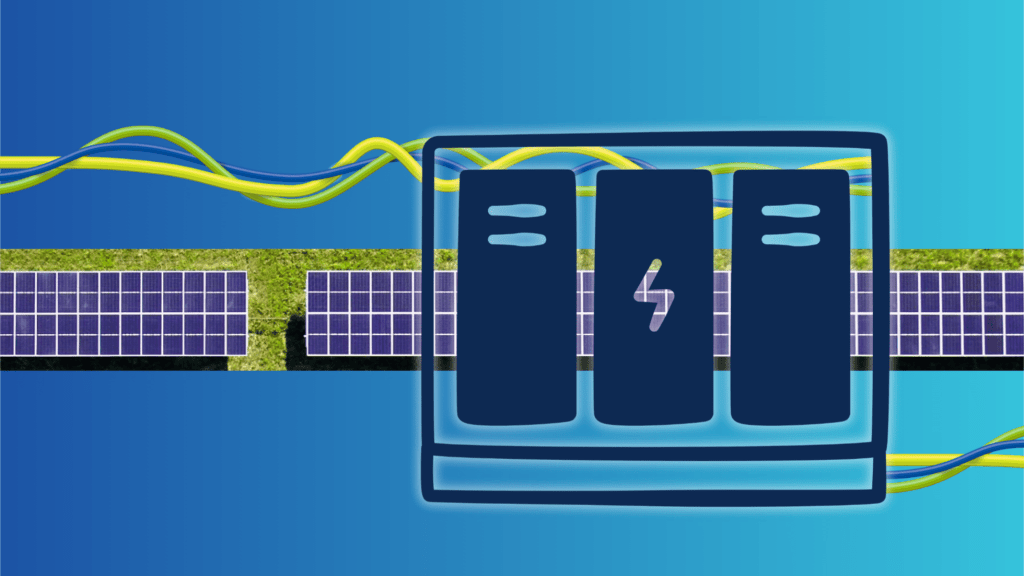
- Battery Energy Storage Systems (BESS): Increasingly common, these systems store excess solar energy for use when the sun isn’t shining. They are typically housed in weather-rated containers and use internal cooling fans.
How Loud Are These Components?
Let’s break down the typical noise levels associated with each major component:
1. Solar Trackers and Motors
The motors used in solar trackers are designed for quiet, gradual movement. They operate intermittently—usually just a few minutes each hour—and produce a sound level that is generally imperceptible beyond a short distance from the equipment. For most people, the movement is quieter than the ambient sounds of wind or wildlife.
2. Inverters
Inverters are one of the primary sources of sound in a solar farm. The noise comes mainly from cooling fans and high-frequency switching equipment. At a distance of 3 feet (about 1 meter), inverters typically produce sound levels in the range of 70 decibels (dBA)—comparable to a household air conditioner running at close range. However, sound levels decrease rapidly with distance:
- At 50 feet: 40–45 dBA (similar to a quiet office or a residential neighborhood at night)
- At 100 feet: 35–40 dBA (comparable to a whisper or rustling leaves)
- Beyond 150–200 feet: Below 35 dBA, which is generally considered imperceptible against typical outdoor background noise
3. Transformers
Transformers emit a low, steady “hum” caused by magnetostriction inside the core. At 3 feet, this hum is typically in the 50–60 dBA range. Like inverter noise, transformer sound drops off sharply with distance and is usually indistinguishable from background noise at property boundaries.
4. Battery Energy Storage Systems (BESS)
BESS units, especially those using lithium-iron-phosphate (LFP) chemistry, generate relatively low sound levels from internal cooling fans and HVAC equipment. During peak cooling operation, sound levels may reach 70 dBA at 3 feet, but quickly fall to:
- 40–45 dBA at 50 feet
- 35–40 dBA at 100 feet
- Below 35 dBA beyond 150–200 feet
For context, 35 dBA is roughly equivalent to the ambient noise of a quiet residential neighborhood at night.
How Does Noise Travel?
A key principle in acoustics is that sound energy dissipates rapidly as you move away from the source. For solar projects, this means that even if equipment produces noticeable sound up close, it becomes much quieter at the property boundary and is often imperceptible at nearby homes or public spaces.
Additional factors further reduce noise:
- Vegetation: Trees and shrubs absorb and scatter sound waves.
- Fencing and Berms: Physical barriers block and reflect noise.
- Topography: Changes in elevation can shield receptors from direct sound paths.
Regulatory Standards and Compliance
Solar projects in the United States are subject to strict noise regulations, typically enforced at the state or local level. For example, Massachusetts Department of Environmental Protection (MA DEP) regulations require that noise from new equipment does not increase ambient sound levels by more than 10 dBA at the property line and must not exceed certain absolute thresholds. Most modern solar and storage projects are specifically engineered to comply with these standards, often exceeding them by a wide margin.
Comparing Solar Farms to Other Land Uses
It’s important to put solar project noise in context. Compared to other common land uses—such as highways, industrial facilities, or even golf courses with frequent mowing and irrigation—solar farms are remarkably quiet. The intermittent hum of an inverter or transformer is far less intrusive than the ongoing sounds of internal combustion engines, heavy equipment, or large-scale irrigation systems.

Addressing Community Concerns
Despite the low noise profile of solar projects, community concerns are valid and should be addressed transparently. Here are some best practices for solar developers and planners (and what neighbors can ask for):
- Conduct Sound Studies: Use professional acoustical modeling to predict noise levels at various distances and under different conditions.
- Share Data: Provide clear, accessible information about expected noise levels and how they compare to everyday sounds.
- Design Thoughtfully: Place the noisiest equipment (inverters, transformers, BESS containers) as far from homes and sensitive receptors as possible.
- Use Mitigation Measures: Incorporate landscaping, fencing, and berms to further reduce sound transmission.
- Monitor and Respond: After installation, measure actual noise levels and address any unexpected issues promptly.
The Bottom Line
Solar farms are among the quietest forms of energy generation available today. While inverters, transformers, and battery systems do produce some sound, these levels are low, drop off rapidly with distance, and are typically imperceptible at property boundaries or nearby residences. With thoughtful design, compliance with regulatory standards, and open communication, solar farms can coexist harmoniously with their communities—delivering clean energy without disrupting the peace and quiet of the neighborhood.