








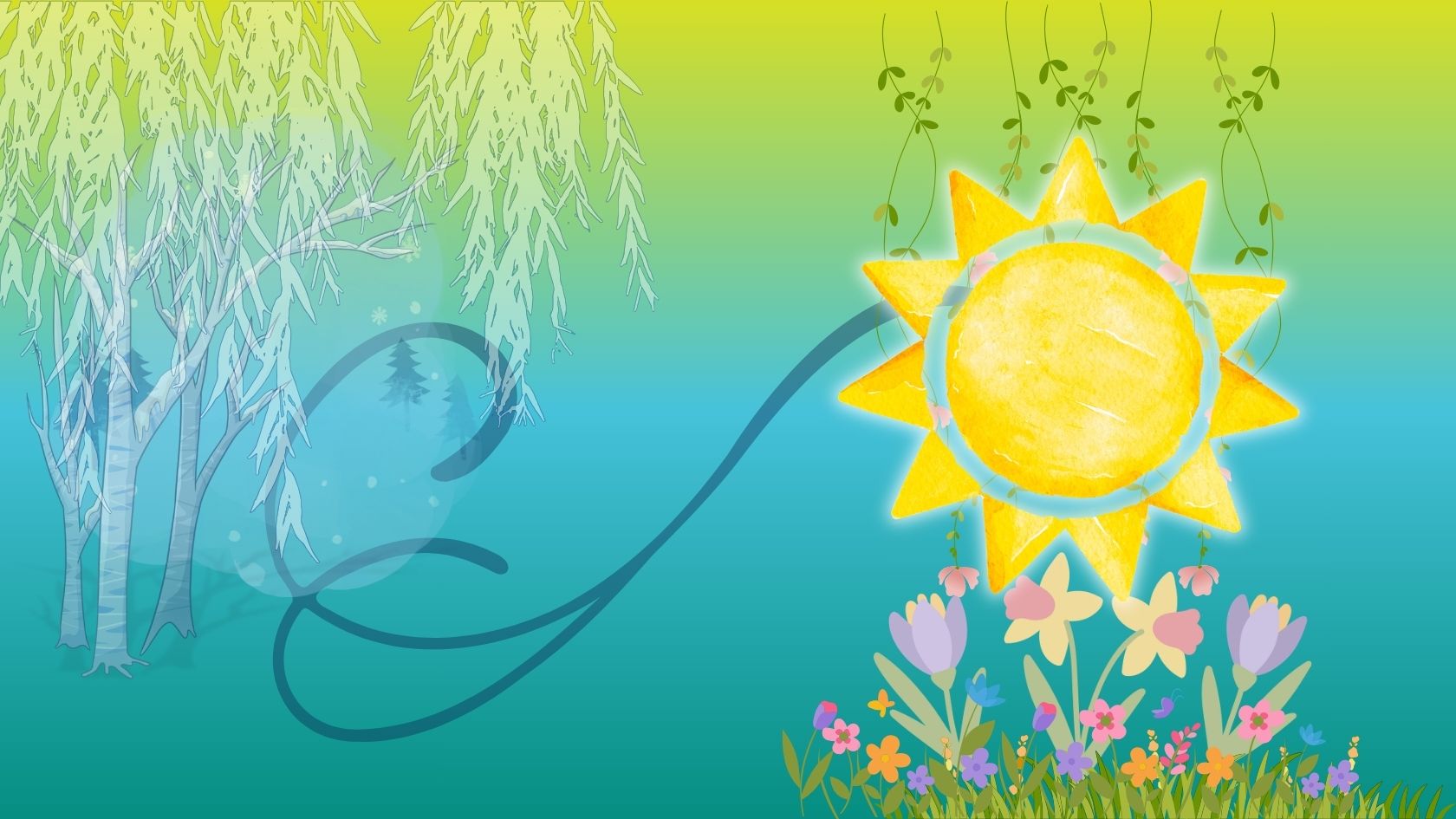
Each March, the Northern Hemisphere reaches a quiet but powerful milestone: the spring (vernal) equinox. It’s the moment when day and night are nearly equal in length, marking winter’s end and the beginning of spring. While today we often experience it as a line on the calendar, the spring equinox has been observed and celebrated for thousands of years as a signal of balance, renewal, and the return of life.
Long before modern energy systems or even written calendars, people across cultures looked to the equinox as a guide — for farming, for ceremony, and for understanding humanity’s place within the natural world. And in a very real way, that ancient awareness still matters today, especially as we transition toward cleaner energy sources like solar.
What Is the Spring Equinox?
The word equinox comes from the Latin aequus (equal) and nox (night). Astronomically, it marks the moment when the sun crosses the celestial equator, resulting in roughly equal daylight and darkness across the globe.
For ancient societies, this balance wasn’t just poetic — it was practical. The equinox reliably signaled that longer days and warmer temperatures were ahead, making it a natural marker for planting crops, moving livestock, and preparing for the growing season.
Ancient Civilizations and the Return of Light
Some of the earliest known civilizations built entire calendars and monuments around the equinox.
In Mesopotamia and ancient Egypt, the spring equinox aligned closely with agricultural cycles. It marked the transition into the planting season and was often associated with ideas of rebirth, cosmic order, and divine balance. These societies understood that human survival depended on paying attention to seasonal rhythms — and the equinox was one of the most dependable signals nature offered.
Across the Atlantic, the Maya demonstrated remarkable astronomical precision. At Chichén Itzá in present‑day Mexico, the pyramid known as El Castillo was engineered so that on the spring equinox, sunlight casts a shadow resembling a serpent descending the staircase. This phenomenon symbolized renewal and the return of the god Kukulkán — a vivid reminder that light, life, and time were deeply intertwined.
In Europe, monuments such as Stonehenge reveal similar sophistication. While more famous for its solstice alignments, Stonehenge also reflects an ancient understanding of equinoxes as key seasonal markers. These sites weren’t accidental; they were built to honor moments when the balance of the natural world visibly shifted.
Spring, Fertility, and New Beginnings
For many cultures, the spring equinox became closely associated with fertility, growth, and renewal.
Germanic and Celtic traditions honored deities connected to spring and dawn, such as Eostre (or Ostara). Symbols we still associate with spring — eggs, flowers, hares — all trace back to these early celebrations of new life emerging from winter dormancy. Even modern Easter traditions echo these older seasonal themes, reflecting how deeply the equinox has shaped cultural memory.
One of the oldest continuously observed equinox celebrations is Nowruz, the Persian New Year. Celebrated for more than 3,000 years, Nowruz begins precisely at the spring equinox and centers on renewal, community, and harmony with nature. It remains widely celebrated across Central and West Asia today, underscoring how enduring this moment is across cultures and centuries.

Why the Spring Equinox Is a Pivotal Moment for Solar Energy
While the symbolism of balance and renewal is ancient, the spring equinox has very real modern relevance for solar energy.
From this point forward, daylight hours increase every day until the summer solstice. Longer days mean more sunlight reaching the Earth’s surface — and more opportunity for solar panels to generate clean electricity.
Just as important, the angle of the sun improves after the equinox. During winter, the sun sits lower in the sky, reducing the intensity of sunlight hitting solar panels. As spring begins, the sun climbs higher, increasing solar irradiance and boosting energy production. This makes the equinox a true turning point: it marks the transition from solar’s slower winter season into its most productive months.
Spring also brings cooler temperatures paired with increasing sunlight, an ideal combination for solar performance. Solar panels operate more efficiently in cooler conditions, meaning early spring can deliver strong output even before summer arrives.
On a system level, the equinox highlights something solar does exceptionally well: working in harmony with natural cycles. Solar generation naturally ramps up as energy demand shifts — from winter heating to spring and summer cooling, longer days, and increased electricity use. Modern grid planning and community solar programs are designed to account for this seasonality, allowing excess summer production to offset lower winter output.
Sign Up for Savings Today
Join our community of over 10,000 community solar subscribers, enjoying clean energy savings and powering change within their local communities!
A Timeless Reminder — and a Modern Opportunity
For thousands of years, humans have looked to the spring equinox as reassurance that winter does not last forever. It is a moment that affirms balance, continuity, and the reliability of the sun’s return.
Today, as we rethink how we power our homes, businesses, and communities, the equinox offers a fitting reminder: our most dependable energy source has always been right above us. Solar energy isn’t just a technological solution — it’s a continuation of humanity’s long relationship with the sun, grounded in observation, respect for natural cycles, and the belief that brighter days lie ahead.
As daylight grows longer and the seasons turn once more, the spring equinox invites us to recognize not only the renewal of the natural world, but the opportunity to build a cleaner, more resilient energy future alongside it.
Further Reading & Resources
If you’d like to explore the history and science behind the spring equinox — and its relevance today — these resources offer helpful context:
History & Cultural Significance
- History.com – Spring Equinox: Ancient Rituals That Celebrate Renewal
An accessible overview of how ancient cultures marked the equinox through monuments, festivals, and seasonal rituals.
https://www.history.com/articles/spring-equinox-ancient-rituals - Ancient Origins – How Ancient People Marked the Equinox Around the World
A global look at equinox observances, from Stonehenge to Chichén Itzá, highlighting early astronomical knowledge.
https://www.ancient-origins.net/ancient-places/how-ancient-people-marked-equinox-around-world-001464 - UNESCO – Nowruz (Persian New Year)
Background on Nowruz, one of the world’s oldest equinox‑based celebrations, still observed by millions today.
https://ich.unesco.org/en/RL/nowruz-00282
Astronomy & Seasonal Cycles
- NASA – Earth’s Seasons
A clear explanation of how Earth’s tilt and orbit create equinoxes and solstices.
https://spaceplace.nasa.gov/seasons/en/ - The Old Farmer’s Almanac – Equinoxes & Solstices
An overview of how people have tracked seasonal changes historically and why they still matter.
https://www.almanac.com/content/what-are-equinoxes-and-solstices
Solar Energy & Daylight
- U.S. Energy Information Administration (EIA) – Solar Explained
Foundational information on how solar energy works and why daylight and sun angle matter for generation.
https://www.eia.gov/energyexplained/solar/ - National Renewable Energy Laboratory (NREL) – Solar Resource Basics
An introduction to solar irradiance, seasonal variation, and performance factors.
https://www.nrel.gov/research/solar.html